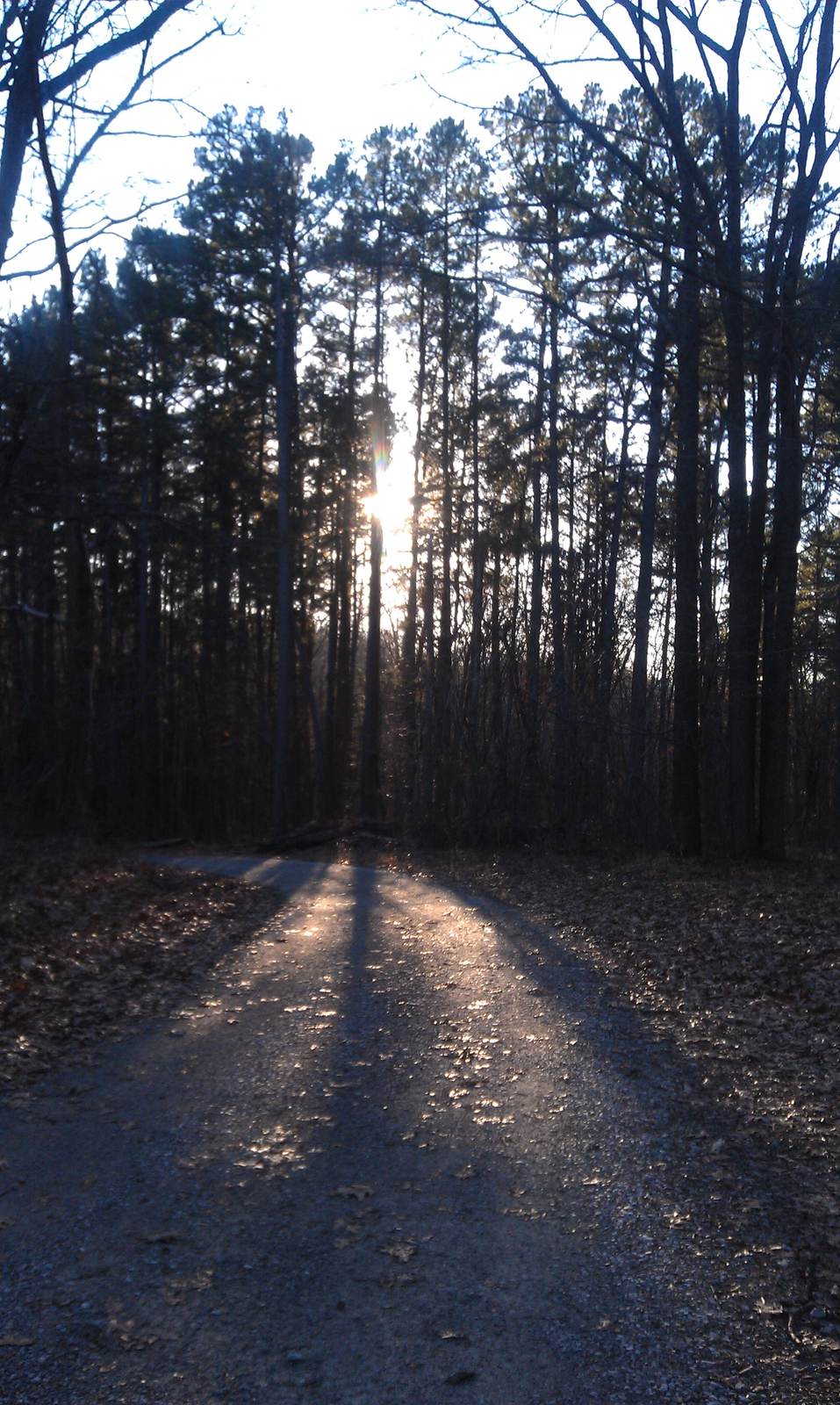
Backpacking is a great way to see the bluffs, creeks and hollows of the Shawnee Hills. It can be a two-week trip on the River to River Trail, a one-night trip out of Garden of the Gods, or a family adventure. There is something here for every age.
Primitive camping outside the developed campgrounds is free and allowed any time of year.
Where you can camp
- Outside developed recreation areas, at least a quarter mile from campgrounds and picnic areas.
- At least 150 feet from trails and from any lake, river, stream or creek. Wash dishes that far from water too.
- Not in designated natural areas. These are marked with yellow posts.
- Only on national forest land. Don't trespass on private land, which is mixed in all through the forest.
- No camping with horses or pack animals in the Bay Creek, Garden of the Gods or Lusk Creek wilderness areas, or in any wilderness.
How long, and how to leave it
You can stay up to 14 days in one spot, but you can't build anything permanent. Don't cut live trees or brush. Burn only dead and down wood, and make sure your fire is dead out before you leave. Pack out all your trash, and naturalize your campsite when you go so the next person finds it wild.
In popular areas, use the existing camp spots away from trails, water and bluff tops instead of making new ones.
Where to leave your car
Park overnight only where it is allowed, like trailheads, and don't block roads or gates. Areas signed as day-use (open 6 a.m. to 10 p.m.) are closed to overnight parking. At Garden of the Gods, use the Backpacker's Parking Lot at the Indian Point Trailhead. At Camp Cadiz, park at the trailhead or along Forest Road 598.
Wilderness rules
The forest's seven wilderness areas are non-motorized backcountry. No permit is needed to hike or camp in them, but:
- No motorized or mechanical equipment, and that includes bicycles.
- In Garden of the Gods, Lusk Creek and Bay Creek wilderness, groups are limited to 10 people.
- Bury human waste in a cathole 6 to 8 inches deep, at least 200 feet from campsites, trails and water.
- Don't burn your trash. If you build a fire, use an existing fire ring and only dead and down wood.
Be ready
The backcountry has its own dangers: high water, storms, falls, venomous snakes, poison ivy, cuts and thorns. Let someone know when you leave and when you expect to be back. Your phone may not work, and if you get hurt, help may take a lot longer than you would expect. Treat or filter all creek water, and don't count on the creeks in a dry spell.
Leave No Trace
- Plan ahead and prepare.
- Travel and camp on durable surfaces.
- Pack it in, pack it out.
- Leave what you find.
- Keep fires small, or skip them.
- Respect wildlife and other visitors.